
When Should You Start Using A TENS Machine During Labour?
Posted by Lisa Akins on 31st Jul 2026
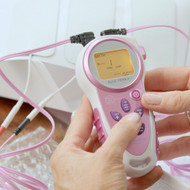
The short answer is earlier than most people expect. The Elle TENS machine works best when it's switched on right at the start of labour, not once contractions are already intense.
Why timing matters
A TENS machine helps in two ways: it interrupts pain signals travelling to the brain, and it encourages the body to release endorphins, its own natural pain-relieving hormones. NHS guidance notes it tends to work best during the latent, early phase of labour. The endorphin effect takes time to build. Switch the machine on early, and those endorphins have a chance to accumulate before contractions reach their strongest point. That's the main reason midwives suggest starting sooner rather than later.
It's worth noting that a TENS machine isn't meant for managing general pregnancy discomfort before your 37th week of pregnancy (unless under medical supervision), since using one before the baby is full term could bring on labour.
Signs that it's time to start
You don't need to wait for anything dramatic. The usual signs of early labour are enough:
- Irregular tightenings, a bit like period cramps
- A dull ache across the lower back
- Contractions that come and go without a clear pattern yet
- A general sense that things are starting to happen
Once you notice any of these, it's reasonable to put the machine on at its lowest setting and let it run in the background while you carry on as normal at home.
What if it's a false start
Early labour doesn't always run in a straight line. Contractions sometimes settle down again for a while before picking back up.
If that happens, there's no harm in taking the pads off and reapplying them later. Nothing is wasted by starting early and pausing if things go quiet.
Interestingly, many women in the early stages of labour who remove their TENS electrodes to take a quick shower often say they only realise how much the TENS machine was helping once they experience contractions without it. This highlights just how effective TENS can be during labour.
As contractions strengthen
Turn the intensity up gradually as contractions become stronger and closer together. This is when the Boost Button comes in: press it during a contraction, then release it once the contraction eases, so the current drops back to its gentler 'endorphin release' Burst level in between.
By the time labour is fully established, the machine should already feel familiar rather than new. That familiarity matters more than people expect. Fumbling with settings mid contraction is far harder than adjusting a dial you've already used for a few hours.
Does it still help later in labour
Many women find their TENS machine is most helpful during the earlier stages of labour, while they're still at home and able to move around freely. As labour progresses and things become more intense, some women choose to use other options too, such as a birth pool, gas and air or an epidural. Others find that their TENS machine continues to support them all the way through to meeting their baby.
But that doesn't mean it's any less valuable if you only use it for those first few hours. TENS doesn't have to take you all the way through labour to make a difference. Helping you manage those early contractions, stay calm and feel more in control while you're at home can be a huge benefit in itself.
If you're being induced
The same early start applies if your labour is being induced rather than starting on its own. Endorphin production doesn't build any faster just because labour has been prompted rather than spontaneous, so switching a machine such as the Obi TENS on as soon as tightenings begin still gives it the best chance to help.
Getting ready in good time
It helps to be familiar with the machine well before any of this starts. Read through the instructions, practise the pad placement with a birth partner, and know where the Boost Button is without having to look for it.
If you're hiring a machine, arrange it in good time so it's ready and waiting rather than something you're sourcing once contractions have already begun. The same applies if you'd rather buy one outright to keep. Our FAQs cover the practical questions that tend to come up before labour starts, and a midwife can talk you through timing at any antenatal appointment.